


A virtual model is a digital human figure used to display clothing, accessories, or products in online images, ads, videos, and shopping experiences.
Created with AI, CGI, or real-person digital doubles, it helps shoppers see fit, shape, styling, and product details more clearly before they decide to buy online today.
The importance of virtual models in ecommerce is growing because brands need faster, clearer, and more consistent product visuals.
They can support catalog images, virtual try-on, social media content, and online campaigns without replacing the value of real photography. Explore how this technology is changing product presentation in online retail.
What Is a Virtual Model?
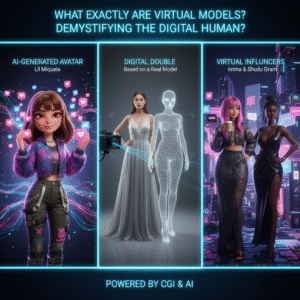
A virtual model is something that is made on a computer to show products, clothes or things that a company wants to sell. It can look like a person or it can be made to look special or it can be completely made up depending on how it is made.
In shopping virtual models are often used to show pictures of clothes to make ads, for fashion to post on social media to let people try on clothes virtually and to make online ads. By hiring a real person to model every product a company can use a virtual model to show what something looks like when you wear it.
So when people look up “what does virtual model mean” or “virtual model meaning” they are usually asking about a person that is used to show products, fashion or things you can buy online. You can make a virtual model using:
- AI image tools
- CGI and 3D design
- Digital avatars
- Human-based digital doubles
- Try-on technology
The main idea of virtual models is simple, to help people understand what they are buying before they pay for it. Virtual models are used to help people see what something looks like. That is why companies use virtual models.
How Do Virtual Models Work?
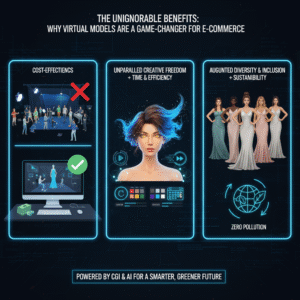
Virtual models work in ways depending on the technology behind them. Some virtual models are built from scratch while other virtual models are created from product photos and digital editing.
AI Virtual Models
An AI virtual model is created using intelligence. A brand may upload a product photo, choose a model style and generate an image where the product appears on a person. AI virtual models are popular because they can create product visuals quickly.
They can also show clothing on model types, poses and backgrounds. However, the output still needs checking because AI can make mistakes with hands, fabric, shadows, patterns and product details of the virtual models.
CGI Models
A CGI model is created with computer graphics. Designers build the CGI model, body shape, skin texture pose, clothing, lighting and background using 3D tools. CGI models are often used when a brand wants control over the final look of the CGI models. They can be very polished. They usually require more time, skill and planning than simple AI-generated images of the CGI models.
Digital Doubles
Some virtual models are based on people. With permission a real model can be. Digitally recreated to make digital doubles. The brand can then use that version for future images or campaigns of the digital doubles. This method can be useful. It must be handled carefully. Consent, fair payment and clear usage rights are important, for the doubles and the virtual models.
Types of Virtual Models Used in Ecommerce
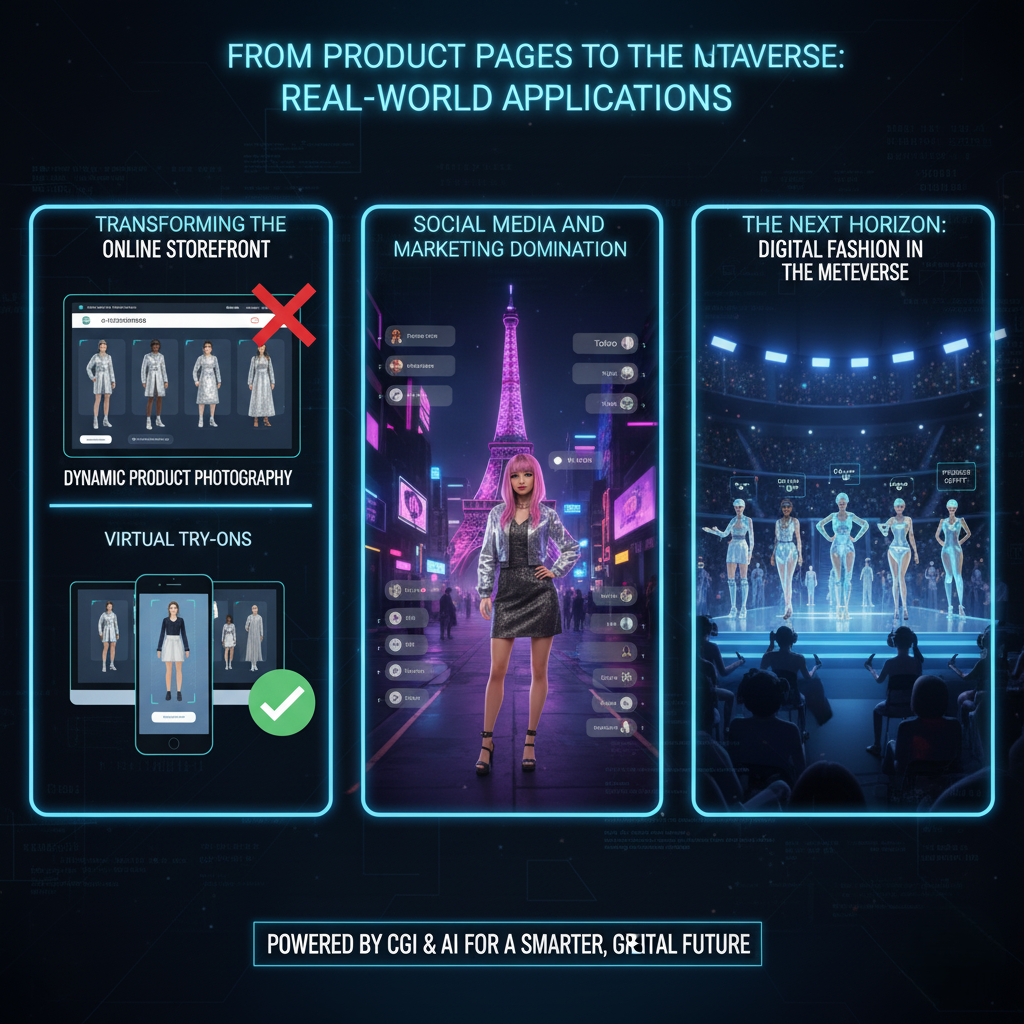
Virtual models are really different from one another. Here are the types that fashion and online retail brands use the most.
AI Fashion Models
These models are made to show clothes, shoes, bags, jewelry and other products. You can see them on product pages in ads, lookbooks and on media.
CGI Models
CGI models are completely made on computers. They are great for campaigns, digital fashion projects and brands that want to control how things look.
Virtual Fashion Models
A virtual fashion model is any model used in fashion. This includes AI models, CGI models, avatars and digital doubles. Virtual fashion models are used in different ways.
Virtual Influencers
Virtual influencers are not the same as models. They have names, personalities, social media profiles and people who follow them. Brands like to work with influencers to tell stories, run campaigns and partner with them.
Virtual Try-On Models
Virtual try-on is a way for shoppers to see what a product will look like before they buy it. It is really common, in fashion, eyewear, makeup, shoes and accessories. Some tools use models while others let shoppers upload their own pictures to try things on.
Virtual Models vs Real Models
Virtual models and real models both have their place in ecommerce photography. One is not always better than the other. The right choice depends on the product, budget, timeline, and brand style.
| Factor | Virtual Model | Real Model |
| Creation | AI, CGI, or digital editing | Physical photoshoot |
| Speed | Faster for large catalogs | Needs scheduling and production |
| Cost | Often cheaper at scale | Can be costly for repeated shoots |
| Flexibility | Easy to change pose or background | Limited after shooting |
| Realism | Needs review for natural details | Naturally human and authentic |
| Best Use | Catalogs, ads, product testing | Lifestyle shoots and premium campaigns |
Real models are still important for emotion, movement, and authentic storytelling. Virtual models are useful when a brand needs speed, consistency, and more product visuals.
Importance of Virtual Models in Ecommerce
The importance of virtual models in ecommerce comes from the way people shop online. Customers cannot touch, try, or feel the product. They depend on images to judge size, fit, shape, color, and style.
For clothing brands, a plain product photo is often not enough. Shoppers want to know how a shirt fits on the body, how long a dress looks, or how a jacket appears when styled. Virtual models help answer these questions visually.
They are useful for ecommerce brands because they can:
- Show products on different body types
- Create on-model images faster
- Keep catalog images consistent
- Support seasonal product launches
- Reduce repeated photoshoot costs
- Create more ad and social media visuals
- Help customers understand product fit and style
For USA ecommerce brands selling through Shopify, Amazon, Etsy, Walmart Marketplace, or their own store, speed matters. A virtual model for clothing can help create more product visuals without waiting for every new photoshoot.
How Ecommerce Brands Use Virtual Models?
Ecommerce brands mostly use virtual models to show fashion products. Virtual models help to present dresses, jackets, shirts, pants, activewear or accessories in a way. By just showing flat images brands can show these products on a digital model. Brands also use models for several things:
- Product Pages: On-model pictures help shoppers see how clothes fit how long they are and what shape they have. This makes the product page more helpful and trustworthy.
- Social Media Content: Virtual models can be used for Instagram posts, Pinterest pictures, seasonal ads, launch images and paid ads.
- Marketplace Listings: Consistent product images make marketplace sellers look more professional.
- Try-On Experiences: Virtual try-on makes online shopping more fun. It helps customers see how a product may look on them before they buy it.
Benefits of Virtual Models for Online Retailers
Virtual models make it easier to create product content for stores that often update their collections. They can create more flexible visuals for online shoppers instead of relying on a full photoshoot for every new item.
- Faster product launches are possible because brands do not always need to wait for models, studio bookings or full photoshoot schedules. This means new collections can go live sooner.
- Using models reduces production pressure. For stores with products, colors or seasonal drops virtual models can make things easier by cutting down on repeated ecommerce photoshoots.
- A virtual model can help create a catalog look. Brands can use the model style pose, lighting and background across product pages. This makes the store feel cleaner and easier to browse.
- Virtual models offer flexible presentation options. A product can be shown in styles, poses or settings. This can be done without starting the creative process again.
- They can help create a shopper connection. Items can be shown on body types, skin tones and age groups. This helps more customers imagine how the product may look on them. We appreciate you taking time to meet with us. Can yo introduce yourself please. You can taled with benglai or english as you prefare
Do Virtual Model Images Still Need Editing?
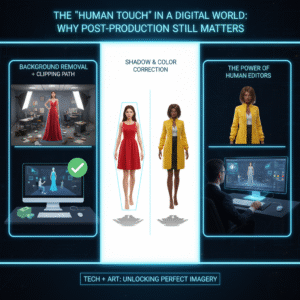
Yes, virtual model images often still need editing. Even good AI model photography or CGI output can have small problems that make the image look less natural. Common issues include:
- Wrong shadows
- Uneven lighting
- Unnatural skin texture
- Distorted hands or body parts
- Fabric that looks too smooth
- Incorrect product color
- Damaged patterns or logos
- Background inconsistency
That is why professional editing still matters. Services like ecommerce product photo editing can help clean up images, fix colors, remove distractions, and prepare visuals for online stores.
Virtual Models and Ghost Mannequin Photography
Virtual models are one choice, but not the only one. Many online stores still use people, flat lay pictures, mannequin photos and ghost mannequin editing.
Ghost mannequin photography is helpful when a brand wants to show how clothing looks without a model or mannequin. It gives the product a 3D look and keeps the focus on the item. If a brand wants this style, a guide on taking product photos with ghost mannequin can be useful.
The best way often depends on the product. A brand might use models for lifestyle photos. They might use models for catalogs. They might use ghost mannequin photos for product pages. Virtual models and ghost mannequin photography are useful for product pages. The product and brand needs help to decide on models or ghost mannequin photography.
Limitations and Ethical Concerns
Virtual models are helpful. Companies must use them in a responsible way.
The main issue is accuracy. If a product looks great on a model but not in real life customers might feel tricked. This can damage trust. Lead to more returns.
Another concern is transparency. Companies should not make shoppers think every picture is from a photoshoot when the model is completely digital.
There is also the issue of body image. Virtual models should not promote body standards. If companies use models they should still show a variety of real body types.
Consent is another issue. If a digital model is based on a person that person’s rights and permission must be respected.
Finally, human review is still crucial. A person should always check the image before it goes live.
Are Virtual Models the Future of Ecommerce Photography?
Virtual models will become a bigger part of ecommerce photography, but they will not fully replace real models or traditional photoshoots.
For large catalogs, fast product launches, and online ads, virtual models are very useful. They help brands create more visuals in less time. For lifestyle campaigns, premium branding, and emotional storytelling, real models still offer something digital images cannot fully copy.
The future will likely be a mix. Smart brands will use real photography, virtual models, ghost mannequin images, AI tools, and professional editing together.
Frequently Asked Questions
Before using models many ecommerce brands still have some questions about how accurate they are, if customers will trust them, how to use them on platforms and what happens with product returns.
Can virtual models really help customers trust a brand?
Yes, virtual models can help customers trust a brand. If the color, shape and fit of the product look right virtual models can make customers feel more confident when they buy something.
Are pictures of models okay to use on ecommerce platforms?
Most ecommerce platforms are fine with pictures of products as long as they show the product clearly. Sellers should always make sure to follow the rules for each platform so that the pictures are accurate and honest.
Can virtual models help with product returns?
Virtual models might help reduce returns by showing how something fits how long it is and how it can be styled. Brands should also give customers size charts, information about the fabric and real details about the product.
What kind of products work well with models?
Virtual models work well for things like clothes, accessories, glasses, shoes, jewelry, bags and other fashion items. These are things where customers want to see what they look like when they are worn or styled.
Do ecommerce brands really need virtual models?
Not always, but virtual models can be really helpful, for brands that do not have a lot of money to spend on photo shoots.
Conclusion
The importance of virtual models in ecommerce is easy to see. They help online brands create product visuals faster, show clothing more clearly, and keep images consistent across websites, ads, and marketplaces.
Still, virtual models work best when they are used carefully. Product accuracy, natural editing, realistic details, and honest presentation matter. A digital model should not just make a product look attractive. It should help shoppers understand the product and feel confident before buying.
For ecommerce brands, virtual models are becoming a practical part of modern product photography and image editing.