

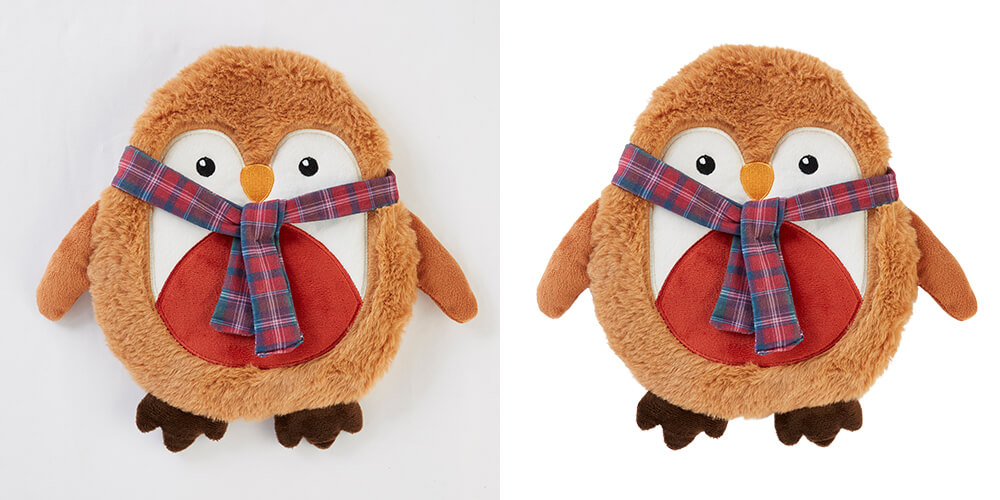
Choosing a professional photo retouching service comes down to four things: the quality of a realistic test, the completeness of the quote, the provider’s ability to handle your volume, and its willingness to follow measurable editing standards.
Do not choose a provider from portfolio images or advertised prices alone.
Start with a varied test, compare every company using the same instructions, and run a small paid pilot before sending your full catalogue.
This gives you a clearer picture of how the team handles quality, deadlines, file organisation, communication, and revisions during real production.
How can you compare photo retouching services quickly?
You can compare providers quickly by asking each one to complete the same test and quote against the same project requirements.
Use this comparison framework:
|
Factor |
What to check |
Warning sign |
|
Relevant experience |
Examples from your product category |
Mostly portraits or unrelated work |
|
Test quality |
Difficult and simple images tested together |
Only one easy image accepted |
|
Pricing |
Written quote showing what is included |
Vague starting prices |
|
Capacity |
Confirmed volume for your editing type |
General capacity claims |
|
Turnaround |
Deadline tied to volume and complexity |
Generic 24-hour promise |
|
Revisions |
Clear correction and change-request policy |
“Unlimited revisions” without terms |
|
Quality control |
Named checks and acceptance standards |
No explained review process |
|
Security |
Access, storage, deletion, and portfolio terms |
NDA offered as the only protection |
|
Communication |
Named contact and escalation process |
No clear point of contact |
The best provider is not always the one with the cheapest rate or the most polished sample. Choose the provider that performs well across the full test, defines the scope in writing, confirms realistic capacity, and agrees to clear quality standards.
What should you inspect in before-and-after samples?
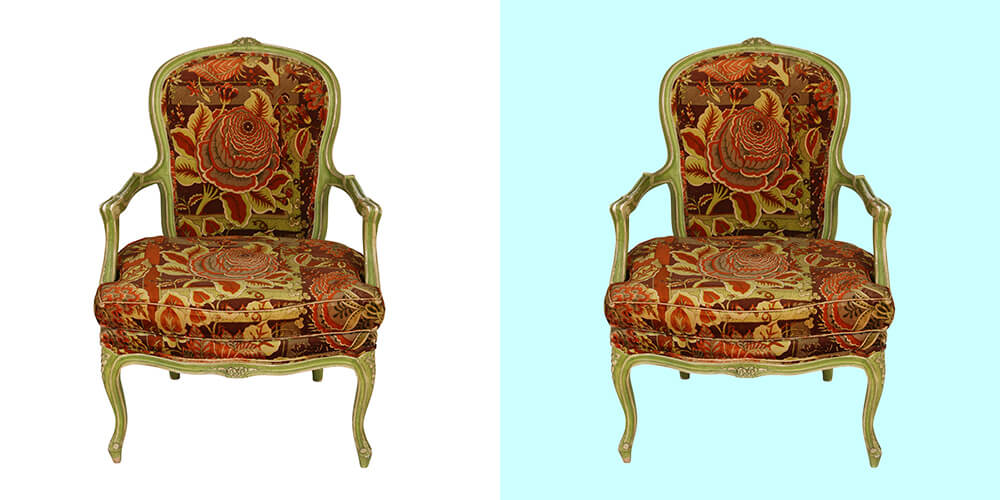
You should inspect whether the edited product remains accurate, natural, and consistent at full resolution.
Review the files at 100% zoom and check for:
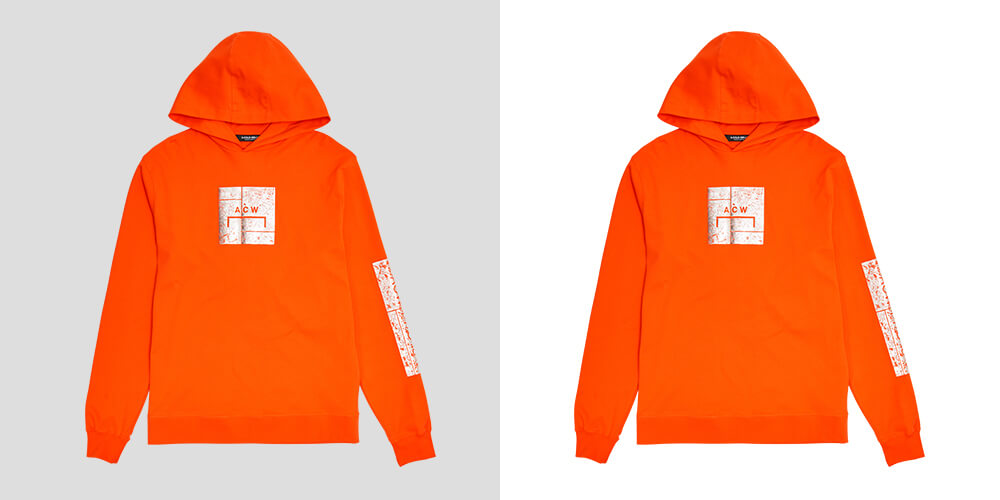
- Clean edges without visible halos
- Preserved stitching, labels, engraving, and textures
- Accurate and believable product colours
- Consistent crop, margins, scale, and alignment
- Natural shadows and controlled reflections
- Clean backgrounds
- Correct dimensions and file formats
- Similar treatment across related products
Be cautious when metal, fabric, skin, or packaging looks plastic. Other warning signs include missing product details, oversaturated colours, uneven shadows, rough masking, and reshaping that changes the actual product.
A visually attractive image is not automatically a commercially accurate image. Ecommerce retouching should improve presentation without misleading the customer.
How should you test a retouching service?
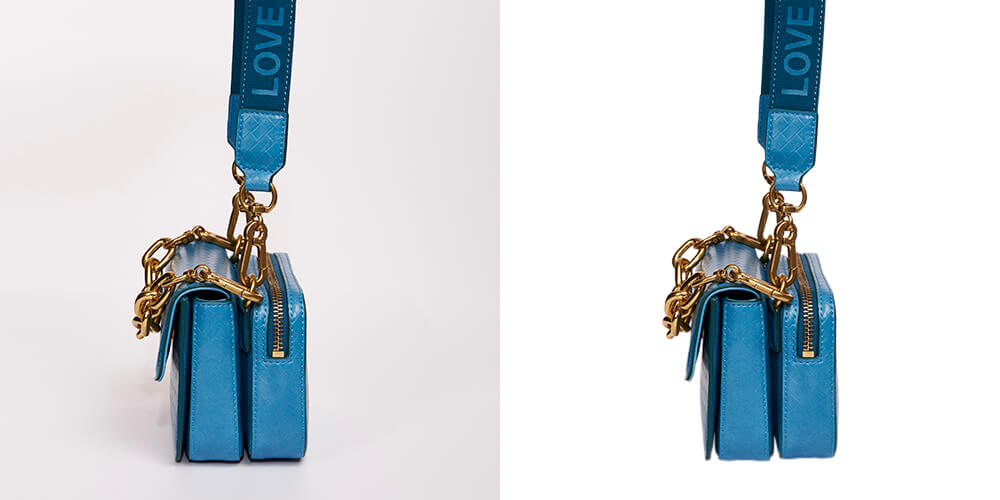
You should test a service with three to five images that represent the real difficulty of your project.
A useful test batch may contain:
- One simple product image
- One image with soft or difficult edges
- One reflective, glossy, or transparent product
- One image requiring colour correction
- One image that must match an approved catalogue style
Provide the same written instructions, output dimensions, file formats, references, naming rules, and deadline to every shortlisted provider.
During the test, evaluate more than visual quality. Check whether the company follows instructions, names files correctly, responds clearly, meets the deadline, and handles feedback without repeating the same mistakes.
A free sample edit can help you assess basic skill, but it may not show how the regular production team performs. For that reason, the next step should be a small paid pilot.
Why should you run a paid pilot batch?
A paid pilot shows whether the provider can repeat the approved quality across a realistic group of images.
A sample edit tests editing ability. A paid pilot tests the whole working process, including:
- Batch consistency
- File organisation
- Communication
- Delivery reliability
- Revision handling
- Quality control
- Instruction retention
- Performance across several editors
The pilot could contain 20 to 50 images, depending on your project size and complexity. It should include the same types of products and editing challenges expected in the main order.
Do not begin full production until the pilot matches the approved sample and all recurring problems have been corrected.
How can you compare photo retouching prices fairly?
You can compare prices fairly only when every provider quotes the same images, services, outputs, and deadline.
A cheap per-image rate may exclude services that another provider includes. Before comparing totals, confirm whether the quote covers:
- Background removal
- Clipping paths or image masking
- Dust and scratch cleanup
- Colour correction
- Reflection cleanup
- Shadow creation
- Resizing and cropping
- File naming
- Multiple output versions
- Layered PSD or TIFF files
- Included revisions
- Rush delivery
- File storage or transfer
Photo retouching service pricing may be based on image complexity, order volume, turnaround, or a custom batch rate. Straightforward background removal should not necessarily cost the same as detailed jewelry or transparent-product retouching.
Ask for a written custom photo retouching quote that separates included work from additional charges. Also confirm minimum-order requirements, bulk discounts, rush fees, and charges for new instructions introduced after production begins.
What quality standards should be agreed before production?
Quality standards should be measurable enough that both sides understand when an image is accepted or needs correction.
Depending on the project, your standards may include:
- No edge halos at 100% zoom
- A fixed canvas size
- Agreed product margins and alignment
- Consistent product scale
- A specified background value
- Correct filename structure
- Required colour profile
- Preserved clipping paths or layers
- Matching shadow direction and softness
- Accurate file count and output versions
- No removal of genuine product details
Create one approved master image for each product type. The provider should use those images as production references.
Can the provider handle your batch size and deadline?
The provider can handle your project only if it confirms capacity for your exact editing level, not just a general daily image count.
Editing 500 basic white-background images is very different from retouching 500 jewelry products with reflection control, colour work, dust cleanup, and several output versions.
Ask the provider to confirm:
- Capacity for your specific service type
- Standard and rush turnaround
- Working days and order cut-off times
- Seasonal or peak-period availability
- Revision turnaround
- Backup capacity
- Whether subcontractors are used
- What happens if your volume increases
- How delays are reported and managed
USA and UK customers should also confirm quote currency, invoicing, support hours, response times, and time-zone overlap.
A dependable bulk photo retouching service should provide a delivery schedule connected to the approved pilot, image count, complexity, and final scope.
How is consistency maintained across hundreds of images?
Consistency is maintained through approved references, stored instructions, assigned production teams, and batch-level quality checks.
Small differences in crop, background tone, product size, colour, and shadows become obvious when images appear together on a category page.
A reliable workflow may use:
- Approved master images
- Brand style guides
- Colour references
- Crop and alignment rules
- File-naming conventions
- Dedicated editors
- A shared correction log
- Batch-level visual checks
- Technical checks for format and dimensions
Ask whether the same team will handle the order and how updated instructions are shared. If one error is found across several images, the provider should be able to correct the remaining batch rather than waiting for every file to be reported separately.
For clothing catalogues, professional ghost mannequin editing can also help maintain consistent necklines, shape, scale, and positioning across the range.
What should the revision policy include?
The revision policy should separate provider mistakes from new client requests.
A correction is needed when the delivered work does not match the approved sample or written instructions. A change request happens when the client introduces a new preference after production has started.
Confirm:
- Number of included revision rounds
- Revision-request deadline
- Correction turnaround
- Treatment of batch-wide errors
- Cost of changed instructions
- Escalation process
- Responsibility for the final quality check
- Procedure when work differs from the approved pilot
“Unlimited revisions” is not automatically a better offer. The scope, response time, and eligibility still need to be explained in writing.
How should a retouching company protect your files?
A secure photo retouching service should control access, use reliable transfer methods, explain file retention, and obtain permission before using client images publicly.
Ask:
- Who can access the files?
- Are freelancers or subcontractors involved?
- How are files transferred?
- How long are files stored?
- When are source and finished files deleted?
- Who owns the edited files?
- Are backups created?
- Is an NDA available?
- Can the company use the images in its portfolio?
An NDA may support confidentiality, but it does not replace practical access controls or a clear deletion policy.
For unreleased products, campaigns, or client-owned photography, confidentiality and portfolio permission should be agreed before files are uploaded. Legal or regulatory claims should be checked in the provider’s formal policies when relevant to your business.
What are the main warning signs of an unreliable provider?
The main warning signs are vague terms, unsuitable samples, inconsistent communication, and promises that are not linked to a clear scope.
Be cautious when you see:
- No samples from your product category
- Only low-resolution portfolio images
- Sudden price changes after submission
- No written deadline
- No clear production capacity
- Vague revision terms
- No explained quality-control process
- No retention or deletion policy
- Generic “best quality” claims
- Poor communication during the test
- Paid work that differs from the approved sample
- Repeated failure to follow references
The trial and pilot stages should reveal most of these problems before your full catalogue is at risk.
What should you send when requesting a quote?
Send enough information for the provider to understand the real scope rather than guessing from a few easy images.
Include:
- Three to five representative files
- Estimated total or monthly volume
- Required editing services
- Product category
- Reference images
- Output sizes and file formats
- Naming requirements
- Layer or clipping-path requirements
- Required deadline
- Expected revision process
Businesses with mixed product requirements can also review the provider’s ecommerce photo editing services before defining the final scope.
Frequently asked questions
How long does it take to edit 500 product images?
The timeline depends on complexity, output versions, available capacity, and the approved pilot. Ask for a project-specific deadline rather than relying on a general turnaround claim.
Can a provider match my current image style?
Yes. Provide approved references, crop rules, colour instructions, file specifications, and master images that the team can follow throughout production.
Can retouching guarantee exact product colour?
Not always. Accurate colour also depends on the original photography, lighting, white balance, monitor calibration, colour profiles, and available references. Retouching cannot fully recover colour information that was not captured correctly.
Can images be prepared for Amazon or Shopify?
Yes, but the requirements differ. Amazon may apply listing and category rules, while Shopify image choices also depend on the store theme, zoom needs, layout, and page speed. Check current platform requirements before final export.
Should layered files cost extra?
They may cost extra because layered PSD or TIFF files require additional preparation and storage. Confirm this before approving the quote.
Test the service before sending your full catalogue
The safest way to choose a professional photo retouching service is to compare providers using the same difficult test images, written instructions, and output requirements.
Once the sample looks right, run a small paid pilot to test consistency, communication, turnaround, and quality control. Confirm the full scope, price, capacity, revision rules, security terms, and acceptance standards before production starts.
For a reliable quote, send three to five representative images, your expected volume, reference style, required services, file specifications, and deadline. This gives the provider enough information to return a realistic price and production plan instead of a vague starting estimate.