

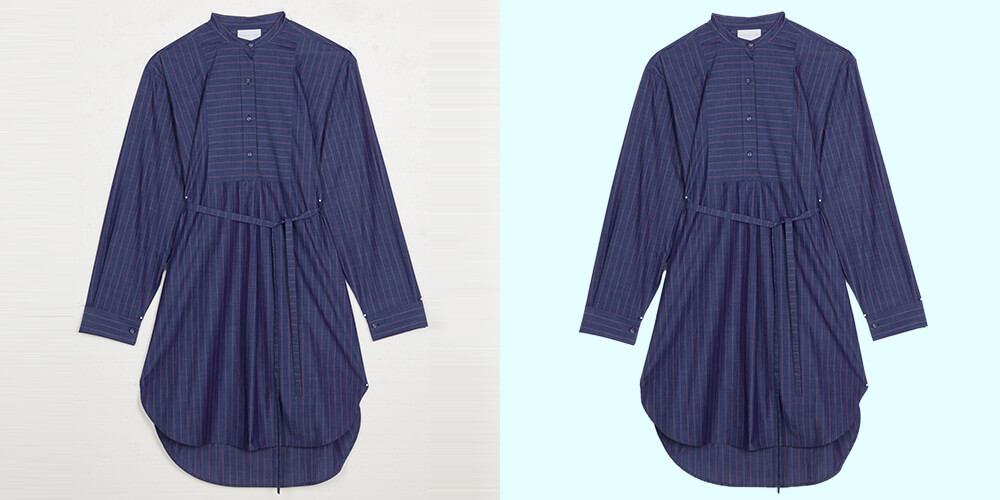
Product photo retouching cost is calculated by multiplying the number of finished images by the rate for each editing level, then adding specialist work, extra output versions, rush delivery, or services outside the original brief.
As a rough guide, simple clipping paths and background removal may start below $1 per image, while standard e-commerce editing, image masking, ghost mannequin work, and general retouching often start at around $1 to $3 per image. Detailed jewelry retouching, complex compositing, reconstruction, and campaign-level editing can cost more depending on the time and skill required.
The final product photo editing cost depends on the condition of the source photo, product material, edge detail, editing instructions, number of outputs, order volume, turnaround, and intended use.
How Much Does Product Photo Retouching Cost per Image?
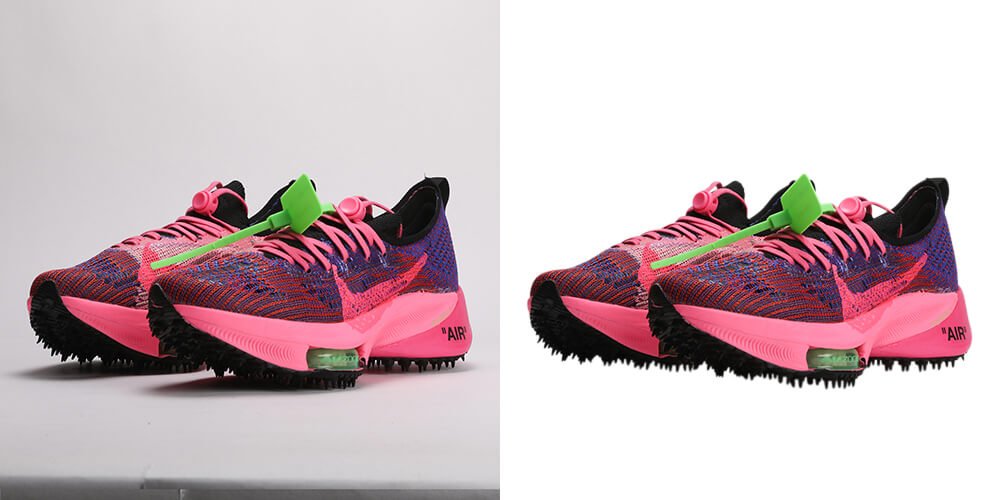
Product photo retouching cost per image can start below $1 for straightforward cutouts and rise to several dollars for detailed retouching, jewelry cleanup, compositing, or reconstruction.
These figures are useful for initial budgeting, but they are not fixed rates for every image. The final price depends on the file’s complexity, source quality, editing requirements, order volume, and turnaround time.
|
Editing service |
Advertised starting price |
Typical use |
|
Clipping path |
$0.29 per image |
Boxes, bottles, and products with clean edges |
|
Background removal |
$0.39 per image |
White or transparent marketplace backgrounds |
|
Shadow creation |
$0.50 per image |
Drop shadows, natural shadows, and reflections |
|
Color correction |
$0.99 per image |
Exposure, white balance, and product color adjustment |
|
Image masking |
$1.19 per image |
Fabric, fur, hair, glass, and soft edges |
|
E-commerce product editing |
$1.19 per image |
Marketplace-ready catalog photos |
|
Image retouching |
$1.49 per image |
Dust, scratches, surface cleanup, and enhancement |
|
Ghost mannequin editing |
$1.49 per image |
Apparel, neck joints, and mannequin removal |
|
Jewelry retouching |
$3 per image |
Gemstones, polished metal, dust, and reflections |
These prices provide a starting point for budgeting. A provider should review representative files before confirming the product retouching price per image, especially when the order contains mixed products or inconsistent photography.
How Can You Estimate the Total Cost of a Project?
You can estimate the total cost with this formula:
Number of images × applicable per-image rate + add-on services + extra outputs + rush charges
For example, imagine a 100-image order containing:
- 70 straightforward e-commerce edits at $1.19 each
- 20 ghost mannequin edits at $1.49 each
- 10 jewelry images at $3 each
The calculation would be:
- 70 × $1.19 = $83.30
- 20 × $1.49 = $29.80
- 10 × $3 = $30
- Estimated total = $143.10
The average product photo editing cost per image would be approximately $1.43 before revisions outside the brief, rush delivery, layered PSD files, or extra marketplace versions.
This is only a planning example. The actual quote may change if individual files need complex masking, reconstruction, reflection cleanup, or several separate outputs.
What Would It Cost to Edit 10, 50, 100, or 500 Images?

The cost of editing 10, 50, 100, or 500 product images depends on the service required, but starting rates can provide a rough budget.
|
Order example |
Starting-rate calculation |
Estimated starting cost |
|
10 retouched product images |
10 × $1.49 |
$14.90 |
|
50 e-commerce product images |
50 × $1.19 |
$59.50 |
|
100 ghost mannequin images |
100 × $1.49 |
$149 |
|
25 jewelry images |
25 × $3 |
$75 |
|
500 simple clipping paths |
500 × $0.29 |
$145 |
A bulk product image editing price may be lower when the images have similar products, consistent camera angles, repeatable instructions, and a flexible deadline. A mixed batch of furniture, apparel, glass, and jewelry may not receive the same per-image rate because each category requires a different workflow.
Small orders may also be affected by minimum invoice values or setup requirements. Ask about minimum charges before using a starting rate to estimate a batch of only one or two images.
Which Editing Tasks Usually Cost Extra?
Editing tasks usually cost extra when they require detailed manual selections, reconstruction, multiple review stages, or new creative work.
Basic e-commerce photo editing packages may include a simple cutout, white-background cleanup, cropping, resizing, and global exposure correction.
Services that may increase the quote include:
- Complex image masking
- Ghost mannequin and neck-joint creation
- Product recoloring
- Reflection and glare cleanup
- Jewelry dust and scratch removal
- Object removal or reshaping
- Label or screen replacement
- Image compositing
- Advanced shadow creation
- Layered PSD delivery
- Several output sizes or marketplace versions
The background removal cost per image is usually lower for a clean box than for fabric, glass, fur, or a semi-transparent bottle. The same applies to clipping path pricing and image masking price: difficult edges take more time to isolate cleanly.
Why Do Some Products Cost More to Retouch?
Some products cost more because their materials, surfaces, shapes, and details demand more precise editing.
Jewelry and watches often need dust removal, gemstone cleanup, metal polishing, color control, and careful reflection work. Depending on the type of specialist treatment, the cost of jewelry photo retouching or such difficult tasks can increase.
Glass and transparent packaging need detailed masking that preserves natural transparency. Apparel can require mannequin removal, neck reconstruction, wrinkle cleanup, and shape correction. Electronics may need screen replacement, perspective correction, surface cleanup, and realistic shadows.
Still, product category alone does not determine the price. A clean jewelry photo may require less work than a badly photographed cardboard package with damaged labels, heavy glare, and missing detail.
What Information Does a Retoucher Need Before Quoting?
A retoucher needs representative files, clear instructions, total volume, output specifications, and the deadline before providing a dependable product photo editing quote.
Include:
- Easy, average, and difficult sample images
- Total source-image count
- Number of finished outputs
- Required editing services
- Product categories
- Final image dimensions
- File formats
- Marketplace or campaign use
- Color references
- Layered-file requirements
- File-naming rules
- Revision expectations
- Delivery deadline
- Expected monthly volume
Each product angle is normally a separate edited image because it must be processed individually. Extra crops, color versions, or marketplace formats may also count as additional outputs.
A recolor created from one approved master image may cost less than editing several separately photographed color variants. Ask the provider to define exactly what counts as one billable image.
Are Revisions Included in the Price?
Revisions may be included when they correct work that does not match the approved instructions, but a new request can create an extra charge.
For example, fixing an edge that was not cut correctly may count as a revision. Changing from a white background to a lifestyle background after delivery is a new request. Other scope changes may include adding a different shadow, replacing a label, creating new color variants, or requesting layered files after the original quote.
Before production begins, confirm:
- How many revision rounds are included
- What counts as a correction
- What counts as new work
- How long the approval window remains open
- Whether new instructions affect the deadline
Is Per-Image, Hourly, or Project Pricing Better?
Per-image pricing is usually best for repeatable catalog work, while project pricing suits mixed or creative assignments.
|
Pricing model |
Best for |
Main risk |
|
Per image |
Catalogs and consistent batches |
Files may be reclassified if complexity varies |
|
Hourly |
Uncertain repair or experimental work |
Final cost is harder to predict |
|
Project rate |
Campaigns, compositing, and mixed deliverables |
Scope changes can increase the price |
|
Bulk agreement |
Recurring, consistent monthly work |
Volume and instructions must remain predictable |
The written quote should explain the pricing unit, including services, turnaround, revision allowance, output formats, and any minimum order.
How Should You Compare Product Retouching Quotes?
You should compare product retouching quotes only after confirming that every provider is pricing the same work.
Check the following:
- Number of billable images
- Editing complexity
- Included services
- Revision policy
- Turnaround
- Rush charges
- Minimum order
- Layered-file charges
- Output formats
- Quality-control process
- Payment terms
- File ownership
- Privacy or NDA conditions
A lower price may cover only an automated cutout, while another quote includes manual edge refinement, natural shadows, color correction, and quality review. Inspect trial images at full resolution and compare edges, labels, textures, colors, reflections, and consistency.
What Source-Image Problems Increase the Cost?
Poor source files increase the cost when the editor must repair problems before completing the requested retouching.
Common issues include heavy dust, strong color casts, clipped highlights, deep shadows, inconsistent angles, damaged labels, low resolution, and distracting reflections.
Some problems cannot be fully repaired. Severe blur, missing product detail, extreme overexposure, or unreadable text may require a reshoot. Sending the most difficult samples before ordering helps avoid unrealistic estimates.
Frequently Asked Questions
Are background removal and clipping paths included?
Simple background removal may be included in an e-commerce package, while complex clipping paths, masking, or transparent edges may be quoted separately.
Does rush product photo editing cost more?
Rush editing may cost more because the provider must reserve production capacity or reorganize scheduled work.
Are layered PSD files included?
Layered PSD files may cost extra because they require a different delivery workflow and larger file handling. Confirm this before approval.
Can I request a trial edit?
UK Clipping Path advertises a free trial of up to two images, allowing buyers to check quality and instruction accuracy before placing a larger order.
How much does ghost mannequin editing cost?
Ghost mannequin editing starts at $1.49 per image, with the final cost depending on complexity, order volume, and add-on work such as wrinkle removal or color correction.
Get an Accurate Product Retouching Quote
The best way to confirm product photo retouching cost is to send representative images from the real project, including the most difficult files.
For apparel orders, explain whether you need mannequin removal, inner-neck reconstruction, wrinkle cleanup, or shape correction. The ghost mannequin service page shows the editing requirements that should be identified separately.
Include your total image count, expected outputs, editing instructions, deadline, file format, and revision requirements. The provider can then confirm the correct complexity level, per-image rate, turnaround, and total project cost before production begins.