

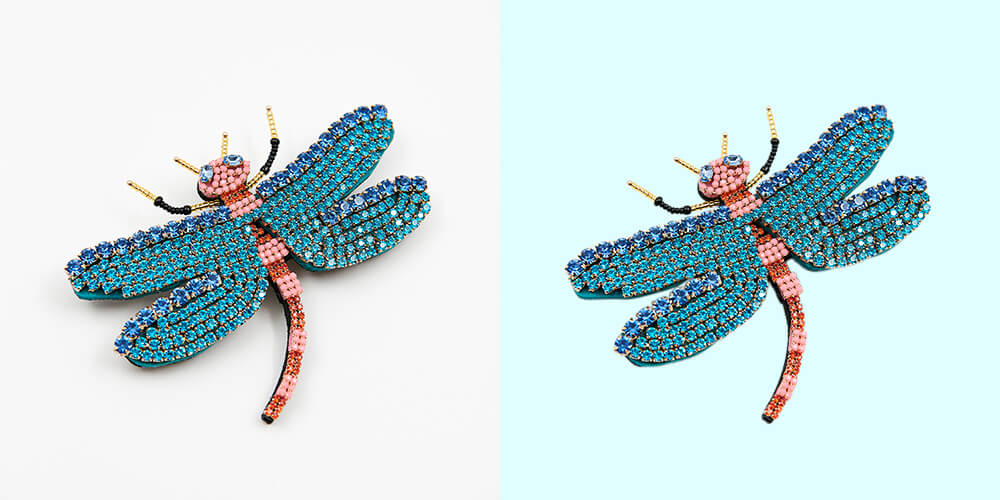
A professional photo retoucher makes detailed corrections that basic photo editing cannot fully handle. They clean distracting areas, correct color, refine textures, control reflections, and prepare images for online stores, advertising, print, portfolios, or client delivery.
Professional photo retouching services can cover anything from simple dust removal to detailed beauty work, jewelry cleanup, background refinement, and large-batch image consistency. The right level of retouching depends on the image category, its current condition, and where the final photograph will be used.
What Is the Difference Between Photo Editing and Retouching?

Photo editing improves the image as a whole, while photo retouching focuses on detailed corrections within specific areas.
|
Service |
Typical work |
Main purpose |
|
Photo editing |
Cropping, exposure, white balance, contrast, and resizing |
Improve the overall image |
|
Photo retouching |
Skin cleanup, product correction, hair refinement, reflection control, and object removal |
Refine selected details |
|
Photo manipulation |
Combining images, replacing elements, or creating a new scene |
Change the image creatively or structurally |
An editor may adjust exposure and color across the whole photograph. A retoucher works more closely on details such as skin texture, product scratches, hair edges, clothing, shadows, or reflections. Photo manipulation goes further by changing the original content or structure of the scene.
What Does a Professional Photo Retoucher Actually Do?
A professional photo retoucher improves specific parts of an image while protecting the subject’s real shape, texture, color, and identity.
Common photo retoucher responsibilities include:
- Removing dust, scratches, blemishes, and unwanted objects
- Correcting uneven colors and local tones
- Refining skin, hair, makeup, and clothing
- Cleaning product surfaces and controlling glare
- Improving backgrounds, edges, and shadows
- Matching an approved style or brand reference
- Keeping crops, brightness, and color consistent across a batch
- Preparing final files for websites, marketplaces, advertising, or print
Adobe Photoshop is commonly used for manual retouching, while Lightroom or Capture One may support RAW processing and batch preparation. Layers, masks, calibrated displays, and non-destructive editing methods make corrections easier to review and revise.
What Types of Images Can a Professional Retoucher Handle?

A professional retoucher can work on your images when they have proven experience with the same subject, visual style, and production volume.
Product and E-Commerce Images
Product photo retouching removes distractions while keeping the item’s shape, material, color, and important details believable.
Typical work includes:
- Dust, scratch, and defect removal
- Background removal or refinement
- Product color correction and recoloring
- Crop, alignment, and sizing consistency
- Reflection and glare control
- Natural shadow creation
- Marketplace-ready image preparation
A good e-commerce image editing service should improve presentation without misrepresenting the product. Warped shapes, incorrect colors, or artificial textures may create unrealistic expectations for customers.
Portrait, Headshot, Beauty, and Fashion Images
Portrait and beauty retouching improves a photograph without removing the person’s identity or making the skin look artificial.
A portrait retoucher may reduce temporary blemishes, balance skin tone, clean stray hairs, refine makeup, smooth clothing, and remove background distractions. Careful retouching keeps pores, facial features, hair detail, and natural proportions visible.
Fashion retouching may also include fabric cleanup, garment shaping, crease control, and consistent color across an editorial or advertising campaign.
Jewelry and Reflective Products
Jewelry photo retouching cleans metal, controls highlights, and improves gemstone clarity without creating a flat or unrealistic finish.
The process may involve removing dust and scratches, refining symmetry, balancing metal tones, shaping reflections, and creating natural-looking shadows. Detailed checking is important because heavy jewelry retouching service can remove engraving, soften stone edges, or change how the real item appears.
High-Volume Images for Studios and Agencies
High-volume image retouching focuses on maintaining the same approved finish across hundreds or thousands of files.
A retoucher or production team may follow a style guide, process recurring batches, use consistent naming rules, prepare layered files, and run quality checks before delivery. This approach is useful for product catalogs, studio galleries, fashion campaigns, agencies, and online retailers.
With bulk image editing, consistency across the entire set is just as important as the quality of one image.
Do You Need Retouching or Is Basic Editing Enough?
You need professional retouching when detailed problems remain after exposure, white balance, cropping, and other basic adjustments are complete.
Basic editing may be enough when an image only needs broad corrections. Retouching is more suitable when it contains difficult reflections, distracting objects, uneven skin, stray hair, product defects, damaged backgrounds, or color-sensitive details.
Professional retouching may also be necessary when:
- Images will be used for advertising or print
- Products must meet marketplace standards
- A large batch needs one consistent style
- Brand or product colors must remain accurate
- High-resolution files will be viewed closely
- Reshooting the original image is not practical
The intended use of the photograph should determine how much retouching is reasonable.
What Factors Affect Professional Photo Retouching Cost?

Professional photo retouching cost depends on image complexity, quantity, source-file quality, turnaround, output format, and revision requirements.
|
Retouching level |
Typical work |
Common pricing method |
|
Basic |
Simple cleanup and broad corrections |
Starting rate per image |
|
Standard |
Detailed local corrections and refinement |
Per-image or project rate |
|
High-end |
Beauty, jewelry, compositing, or complex surfaces |
Custom quote |
|
Bulk production |
Repeated work across a large batch |
Volume pricing |
Complex object removal, compositing, layered PSD delivery, reflective products, color-critical work, and urgent deadlines generally require more time.
Before comparing prices, check what each quote includes. Important details include minimum order requirements, revision rounds, layered-file charges, batch discounts, test-edit terms, rush fees, and final file formats.
How Long Does Professional Retouching Take?
Professional retouching time depends on the number of images, their complexity, the requested finish, and the file formats required.
Straightforward product cleanup will usually need less production time than detailed portrait, beauty, jewelry, or compositing work. Large orders may be delivered in stages so approved images can be used while the remaining files are completed.
To receive a realistic schedule, provide the image category, total quantity, reference examples, output format, deadline, and expected revisions before production begins.
How Does the Photo Retouching Process Work?

The photo retouching process works best when the visual direction is approved before the entire batch is edited.
- Submit the source images. RAW, PSD, TIFF, JPEG, PNG, and DNG files may be used depending on the project.
- Provide clear instructions. Include references, brand guidelines, dimensions, color expectations, output formats, and deadlines.
- Review the scope. The retoucher checks the files to determine complexity, pricing, and production requirements.
- Approve a representative style. A test edit or sample helps establish what should and should not be changed.
- Complete the full batch. The approved approach is applied consistently across the remaining images.
- Perform quality control. Files are checked for color, texture, edges, dimensions, shadows, and batch consistency.
- Review the delivered files. Any requested corrections are handled according to the agreed revision terms.
Approving one representative image early reduces confusion and gives both sides a clear quality reference.
How Do Retouchers Keep Images Natural and Accurate?
Professional retouchers keep images natural by correcting distractions without destroying texture, identity, product shape, or believable color.
For portraits, this means preserving pores, facial features, hair detail, and realistic proportions. For products, it means maintaining material texture, accurate edges, brand colors, and natural shadows. Jewelry requires controlled highlights without losing metal detail or changing the appearance of gemstones.
Because words such as “natural,” “clean,” and “high-end” can mean different things to different people, references and approved samples are important.
Is Professional Retouching Manual, Automated, or AI-Assisted?
Professional retouching often combines manual work with controlled tools for repetitive production tasks.
Manual retouching remains important for skin texture, fine hair, jewelry reflections, product-shape correction, detailed object removal, masking, dodge and burn, and advanced compositing.
Automation may assist with file naming, resizing, batch adjustments, format conversion, and exporting. AI selection or masking tools are different from generative tools that create or replace image content. For private portraits or unreleased products, buyers should confirm which methods will be used.
Frequently Asked Questions
Can a photo retoucher work with JPEG files?
Yes, a photo retoucher can work with JPEG files, although RAW, TIFF, or PSD files often provide more image information and editing flexibility. The best format depends on the required corrections and final use.
Will retouching reduce image quality?
Professional retouching should not noticeably reduce quality when suitable source files, non-destructive methods, and correct export settings are used. Repeated JPEG compression or excessive editing may reduce detail.
Can a retoucher match an existing editing style?
Yes, an experienced retoucher can usually match a reference style when clear examples and instructions are provided. Approving one representative image helps maintain the same look across the full batch.
Are revisions normally included?
Revision terms vary between providers. Buyers should confirm how many revision rounds are included, what counts as a revision, and whether a change in the original brief requires an additional charge.
Can professional retouchers handle large image batches?
Yes, high-volume image retouching can be managed through style guides, approved samples, batch workflows, and quality-control checks. Delivery may be divided into stages for very large orders.
Should product images be heavily retouched?
Product images should be cleaned and polished without changing the item customers will receive. Shape, texture, color, proportions, and important product details should remain accurate.
Choose the Right Professional Photo Retoucher
Choose a professional photo retoucher by reviewing work that closely matches your own image category and quality expectations.
Check genuine before-and-after examples, texture at close zoom, edge quality, product color, shadow control, and consistency across several images. Also review turnaround terms, revisions, file-format support, privacy policies, and communication.
When possible, test one or two representative files before outsourcing a large order. The sample should include the same challenges found throughout the full project.